Fix It
a Speed run game made for my first game Jam the other one doesn't work because i didn't properly build the project(i know this wont be judged because i did it after the time but i only got to know the day after)
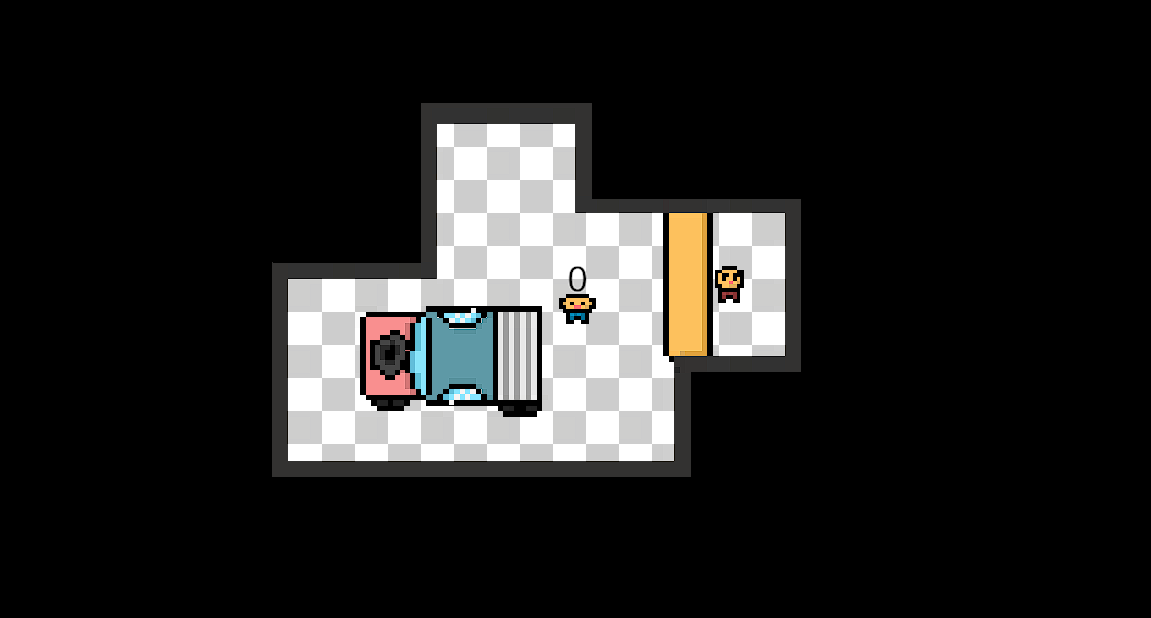
Fix a truck as fast as possible to beat your high score.
Comments
Log in with itch.io to leave a comment.
1. First Impressions (The Cautious Beginning)
When I first came across this game, I didn’t give it much thought. It wasn’t being shouted about in forums or plastered across ads. It didn’t have the kind of trailer that grabs your face and forces your jaw to drop. In fact, I found it almost by accident. Maybe someone mentioned it in passing, maybe it popped up in a “you might like this” section, or maybe I was just scrolling for something to play on a quiet evening. Either way, I didn’t expect much.
The screenshots looked decent. The art style didn’t offend me. The description was vague but not off-putting. I figured: sure, why not. It looked... kinda good, I guess.
Those were my actual words, said half-heartedly aloud to myself before clicking “Install.” Not exactly a glowing endorsement, right? More of a neutral shrug. A statement made out of politeness more than passion. But little did I know, that exact phrase would become the running theme of my experience—only its meaning would change over time. “Kinda good” went from a casual hedge to a backhanded compliment, then to an understatement, and eventually to a sincere declaration of quiet appreciation.
This is the story of how one modest little game, without making a big fuss, earned a big place in my memory.
2. First Few Hours (A Gentle Hook)
Starting up the game, I didn’t know what to expect. I had no expectations to meet—no trailers burned into my brain, no glowing reviews echoing in my head, no friends texting me spoilers. That freedom to just experience a game without preconceptions is rare these days, and I cherished it.
The opening sequence didn’t try too hard. It introduced the world with a light touch—no overly dramatic voiceover, no ten-minute unskippable cutscene. Just enough context to get going. I found myself exploring a world that felt, well, lived-in. Not dazzling or hyper-detailed, but coherent. Grounded. Believable.
Gameplay-wise, the basics came naturally. Movement was responsive. Combat—if there was any—was simple but satisfying. Puzzles made me think without being frustrating. Within an hour, I found myself engaged. Not hooked in a flashy, adrenaline-fueled way, but interested. Curious. It was like reading the first chapter of a book you picked up without expecting to finish—only to realize halfway through that you’re halfway in and still turning pages.
The best part? The game didn’t rush me. It didn’t bombard me with tutorials or constant hand-holding. It let me breathe. It trusted me to figure things out. And that subtle trust? That’s where I started to feel something shift.
Maybe this game wasn’t just “kinda good.” Maybe it had something more to say.
3. Mechanics and Systems (Quiet Complexity)
As I spent more time with the game, the mechanics started to unfold like a slow-blooming flower. What first seemed simple began to reveal depth.
Combat, for example, went from button-mashing to tactical. At first, I was just swinging a sword or dodging attacks. But then I started noticing patterns. Enemies with unique behaviors. Bosses that required more than brute force. Items that synergized. Abilities that built on each other. There was strategy here—not overwhelming, but thoughtful.
Crafting, upgrades, and character development followed a similar pattern. They didn’t flood me with options, but over time, meaningful choices emerged. Do I invest in power or precision? Range or defense? Do I enhance this weapon for short-term gain, or save up for something better? These decisions weren’t life-changing, but they made me feel engaged. Like I was actively shaping my experience, not just reacting to it.
Even the menus were clean and intuitive. A small detail, maybe, but one that speaks volumes. I never felt lost in tabs or drowned in data. The game respected my time—and in return, I respected its design.
4. Worldbuilding and Exploration (Details Make the Difference)
By hour five, I was no longer playing casually. I was invested.
The world, it turns out, had more depth than I gave it credit for. At first glance, it was just another game world. But with each area I uncovered, each character I met, and each side story I stumbled into, it became more than just a backdrop—it became real.
The environments told stories without words. Abandoned ruins with scorch marks hinted at past battles. Notes left behind painted portraits of people who had come and gone. Statues worn by time suggested ancient cultures, now forgotten. It wasn’t just filler—it was lore, baked into the very architecture.
Exploration became its own reward. Not just for loot, but for context. Understanding. And sometimes, for beauty. There were vistas that made me stop and just... look. A village shrouded in twilight. A lake reflecting moonlight. A forest drenched in rain. These weren’t just pretty screens—they were moods. Feelings.
And it didn’t tell me to notice them. It didn’t pause the action and say, “Look at this beautiful scenery!” It simply wasbeautiful. And that made me want to notice it all the more.
5. Characters and Story (Quiet but Resonant)
Story-wise, the game didn’t try to reinvent the wheel—but it did try to make it roll smoothly.
The plot, while not groundbreaking, was compelling. There was a central conflict. There were stakes. But more importantly, there were people. Characters with quirks, flaws, goals, and regrets.
Some companions were sarcastic, others solemn. Some annoyed me at first, only to grow on me later. Others won me over immediately. What they all had in common was this: they felt real. Not just archetypes or dialogue machines, but actual personalities.
And the story didn’t scream for my attention. It unfolded naturally, like a conversation. Big moments hit hard because the quiet ones mattered. A decision I made early on came back later in a way I didn’t expect. A seemingly minor side quest ended with a gut-punch I wasn’t prepared for. These moments didn’t feel forced—they felt earned.
That’s rare. And that’s powerful.
6. Sound and Music (Atmosphere That Lingers)
Let’s talk sound.
The music in this game? Subtle, but masterful. It never overwhelmed the moment. It complemented it. Ambient tracks in caves. Swelling orchestration in battles. Melancholy piano during reflective scenes. The soundtrack didn’t tell me how to feel—it enhanced what I already felt.
Even better was the sound design. Footsteps that changed with terrain. Raindrops on metal versus stone. The distant echo of enemies in the dark. These small touches added layers of immersion that I didn’t even realize I was missing until I heard them.
And voice acting? Understated but genuine. No over-the-top performances. Just believable people, reacting like people would.
7. Pacing and Progression (The Reward of Patience)
One of the game’s greatest strengths was its pacing. It knew when to push, and when to let go.
It started slow, yes. But that slow start gave way to momentum. Each new mechanic was introduced organically. Each area unlocked naturally. I never felt rushed, but I also never felt stuck.
Progression systems were satisfying without being addictive. I wasn’t grinding for loot—I was earning it. Upgrades felt meaningful. Achievements felt deserved. And when I finally unlocked that one ability I’d been eyeing? It felt like a genuine moment of victory.
There were dips, sure. One or two missions dragged. A couple zones overstayed their welcome. But the overall structure was tight. Balanced. Designed by people who understood the value of rhythm.
8. Flaws and Frustrations (Still Worth It)
Look, no game is perfect. And this one had its flaws.
There were bugs—nothing game-breaking, but noticeable. Some animations were clunky. A few UI elements could’ve been more responsive. One boss fight in particular made me want to throw my controller across the room. And the fast-travel system? Don’t get me started.
But here’s the thing: those issues didn’t define the experience. They were like scratches on a vinyl record—visible, sure, but the music still played. And the longer I played, the more I found myself forgiving them. Not because they didn’t matter, but because the good so clearly outweighed the bad.
Sometimes charm matters more than polish. Sometimes intention matters more than perfection. And this game had both in spades.
9. Unforgettable Moments (The Turning Point)
There was a moment.
I won’t spoil it, but I’ll describe it vaguely: I was exploring an abandoned temple. I triggered an optional event. A hidden cutscene began—completely missable. A character I’d barely spoken to revealed something deeply personal. And in that moment, everything clicked.
The story, the music, the silence between lines. It felt raw. Real. Beautiful.
I set the controller down after it ended. Not because I was done—but because I needed a moment to breathe.
That was the moment I stopped calling it “kinda good.” That was when I knew: this game mattered to me.
10. Final Thoughts (From Shrug to Standing Ovation)
So here we are. Five thousand words later. All from a throwaway sentence:
Funny how something so modest can mean so much more.
In a world where games often try too hard, this one didn’t. It didn’t yell. It didn’t beg for praise. It just was. Quietly confident. Thoughtfully built. Sincere in a way that few things are these days.
No, it wasn’t perfect. But it didn’t need to be. It was exactly what it wanted to be—and exactly what I needed at the time. A reminder that greatness doesn’t always come with a bang. Sometimes it comes with a whisper.
And so, I say again, with full honesty:
But now, I mean it in the most glowing, heartfelt way possible.
Can I have RObux My A-L-S
O-o-okay so, um, th-this game is, like, p-pretty fun, b-but my A-A-A-L-S (amazing l-lovely s-sir 😤) — w-we gotta talk...
Th-the screen is s-s-so small I need a m-m-magnifying glass just to see my ch-ch-character move! I-I ain’t tryna play W-w-where’s Waldo every time I l-l-launch the game! G-give us a BIGGER screen, p-p-please 🥺📱➡️🖥️
A-a-and wh-where the HECK is level 2?! I b-b-beat level 1 in like f-f-five minutes and then... poof n-nothing. My A-L-S, you l-l-left me h-h-hanging! G-g-gimme more game!! I-I’m starving out here! 😩
Pl-please fix it... f-for the c-community... for the gamers... f-for me... 🧎
O-o-okay so, um, th-this game is, like, g-g-good, b-but, uh, it really, REALLY n-n-needs a b-b-bigger s-screen! I-I mean, I-I can't even s-s-see what I'm doing half the t-time, it's like p-p-playing hide-and-s-s-seek with the UI!
A-a-and wh-where's level 2?! I-I beat level 1 and th-then… nothing?? N-no next stage? I-I was ready! R-ready to c-conquer! B-but the game just... s-stopped! Wh-what?! Wh-why?! G-give me level 2, p-p-please!
G-great start, but n-n-need more r-r-room... and more g-g-game!
🛜💩
PLEASE UPDATE THE SCREEN SIZE PLZ MY ALS PLZ AND ADD A LEVEL @
ok, working on an update right now
Get Out
hey guys this is the working version of my game
Skib